
Vision
To promote healthy communities, education and development that are more equitable and sustainable — using innovation and creativity to reduce poverty and improve quality of life.
Jimeta-Yola, Adamawa State, Nigeria
SCAF works alongside communities in Adamawa State to widen access to healthcare, education, livelihoods and protection — and to make sure the people affected by those gaps help decide how they are closed.
Registered with the Corporate Affairs Commission as RN8195660 on 20 January 2025.
Founded
2023
CAC registration
RN8195660
Head office
Jimeta-Yola
Thematic areas
6
Who we are
The Sulayham Care Foundation (SCAF) is a non-governmental, not-for-profit organisation founded in 2023 and officially registered with the Corporate Affairs Commission (RN8195660) on 20 January 2025.
SCAF is dedicated to deepening community involvement and participation in poverty alleviation, good governance, transparency, human rights, the healthcare and protection of women and girls, gender-based violence, education, health, and youth development.
The organisation has built partnerships with relevant stakeholders and collaborates with both international and national organisations to reach affected populations with essential services and resources.
The details a partner needs before the first conversation.
Head office
No. 45, Moh'd Jega Road, Karewa
Jimeta, Yola, Adamawa State, Nigeria
What guides the work
To promote healthy communities, education and development that are more equitable and sustainable — using innovation and creativity to reduce poverty and improve quality of life.
To expand access to primary healthcare and wellness, provide quality education and skills development, and improve quality of life, especially in rural communities — including disaster relief and recovery that supports vulnerable populations in critical times.
Commitments are kept and spending is open to the communities and partners we answer to.
We work with government, sister organisations and community structures rather than around them.
We stay with a community past the launch event and through the difficult part of delivery.
We look for the approach that fits the place, not the approach that fits the template.
Our work
A girl who leaves school early is more likely to marry early, deliver without a skilled attendant, and have no income of her own. SCAF works across the whole chain rather than one link of it.
Primary healthcare access and wellness, with particular attention to women's and girls' health and to rural facilities that carry more patients than they were built for.
Getting children into classrooms and keeping them there, plus skills development for young people leaving school without a route into work.
Income-earning skills, small enterprise support and asset recovery for households whose farming or trading was interrupted by conflict or climate shocks.
Helping communities prepare for flooding and erratic rainfall along the Benue valley, and adapt farming practice to a shortening growing season.
Transparency, accountability and human rights work that gives residents a real seat at the table where decisions about their services are made.
Prevention, survivor referral pathways and community dialogue — reaching women and girls who currently neither report nor tell anyone.
Objectives
Ensure every individual, regardless of background or circumstance, has equitable access to comprehensive healthcare, safety measures, livelihood opportunities and quality education.
Promote inclusivity by actively engaging marginalised populations, community leaders and young people, and fostering their participation in decisions about healthcare, safety, livelihood and education in their communities.
Work with government and sister organisations to maximise resources, share best practice, and collectively address the complex barriers to universal access.
Build resilient communities through programmes that strengthen their capacity to withstand and recover from shocks, so access to essential services is sustained.
Good governance
Governance work starts with the card that makes a vote possible. SCAF and DISCOD took the Permanent Voter Card campaign into community squares — sitting with elders, ward heads and young people to explain what the PVC entitles them to, and to make the case for a peaceful, credible election free of vote buying and intimidation.
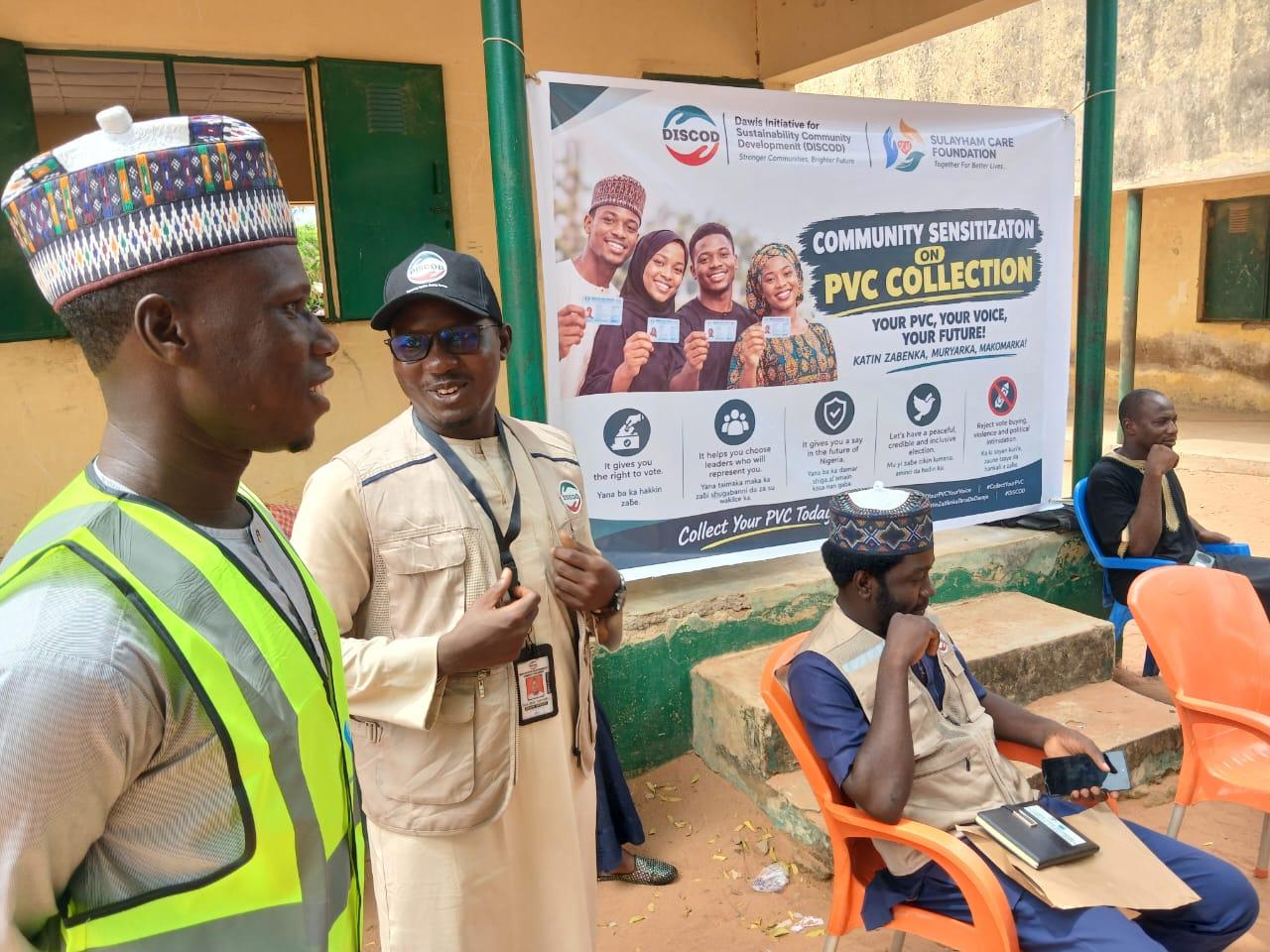
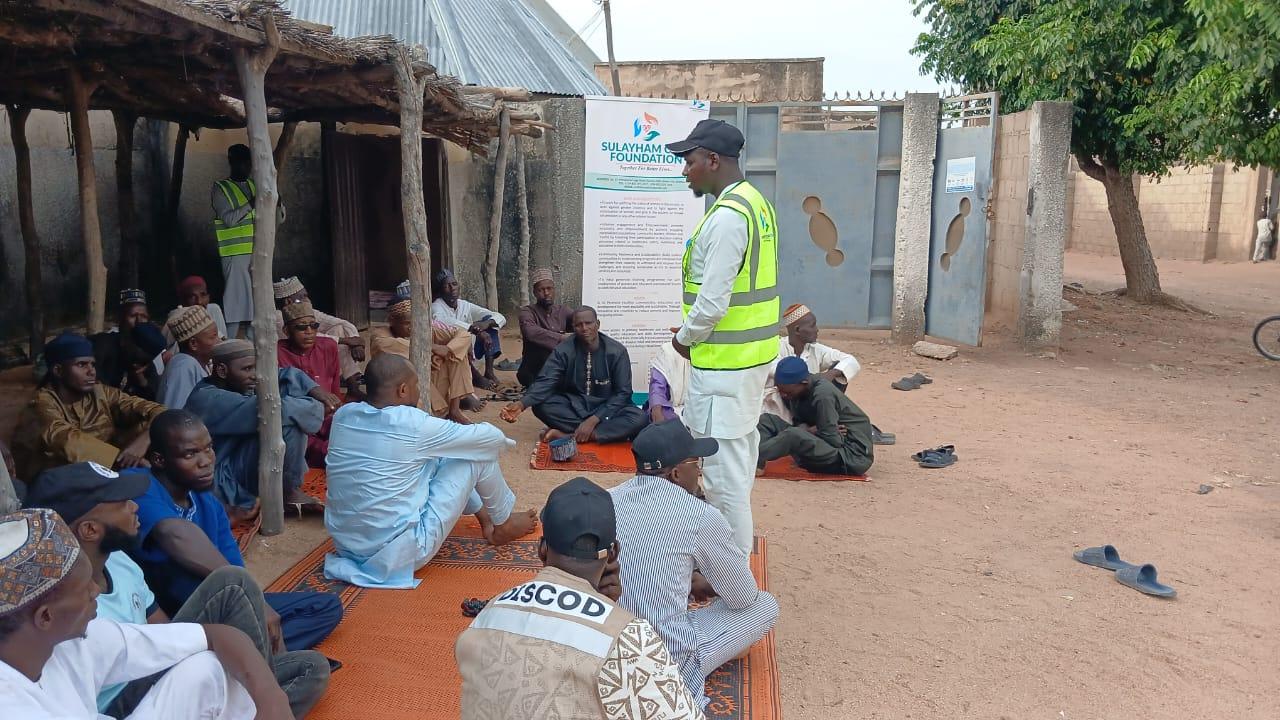
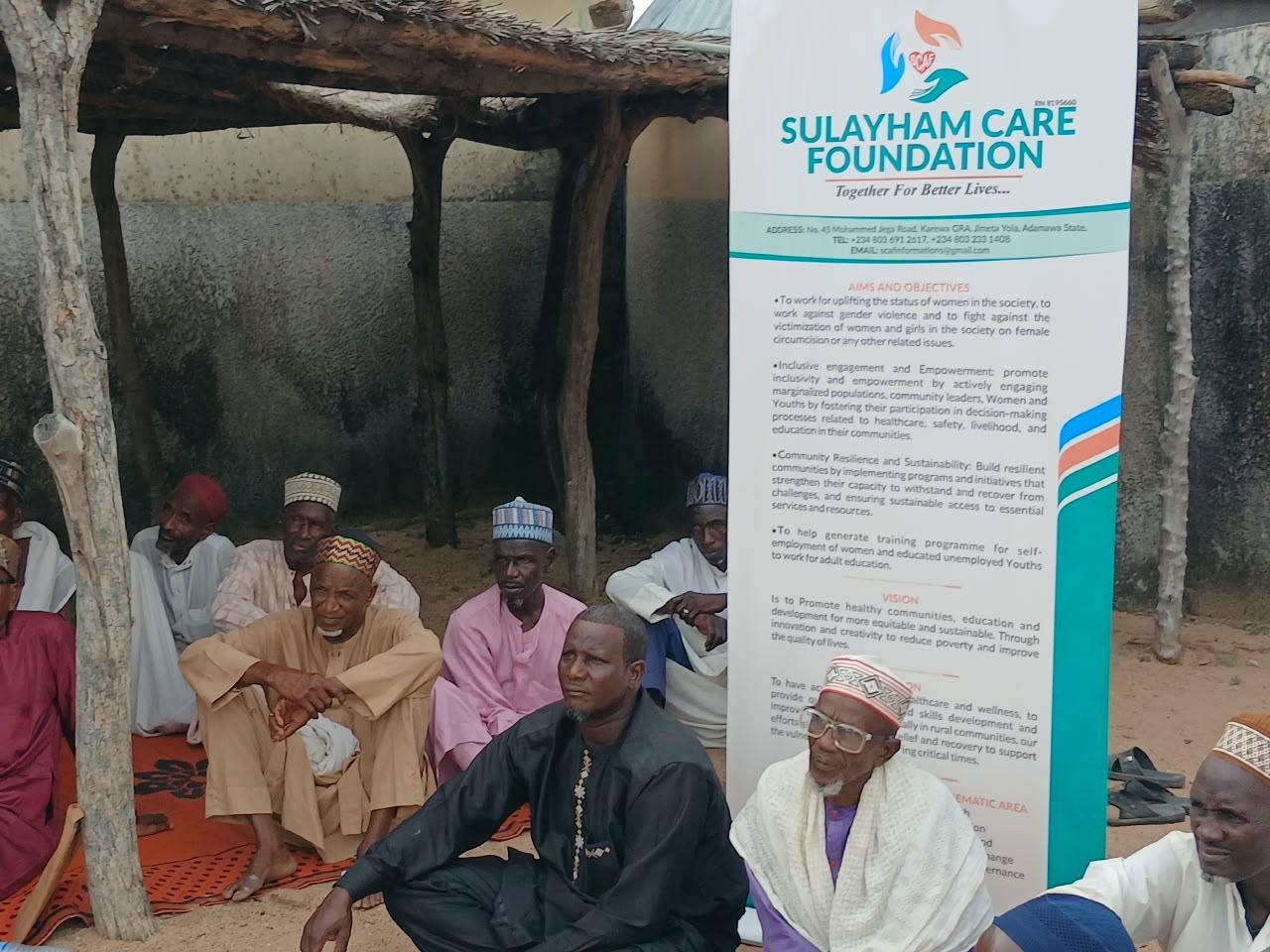
“Your PVC, your voice, your future — Katin zabenka, muryarka, makomarka!”
Delivered in partnership with Dawis Initiative for Sustainability Community Development (DISCOD).
The need
Published national and regional figures, so partners can check every one. Last reviewed September 2026.
Adamawa carries the lowest headcount in the North-East — which still means three in five residents are deprived across health, education, living standards, and work and shocks.
National headcount for comparison: 63%
National Bureau of Statistics, Nigeria Multidimensional Poverty Index 2022
0.0million
children out of school in Nigeria — 10.2m of primary age and 8.1m of secondary age.
UNICEF Nigeria, 2024 and 2025 statements
Roughly one in five women aged 15–49 has experienced physical or sexual violence. The response gap is the part programming can move.
21% of women aged 15–49 have experienced physical or sexual violence.
Nigeria Demographic and Health Survey 2024; NAPTIP case data
Antenatal attendance has climbed, but almost half of all deliveries still happen without a skilled attendant present.
Funding received in 2025 was about half the 2024 level. The 2026 appeal asks for $516m to reach 2.5 million people — which is why locally rooted organisations now carry more of the load.
Dark bars are funding received. The orange bar is the 2026 appeal, not money in hand.
UN OCHA Nigeria, 2026 Humanitarian Needs and Response Plan launch
2021 projection from the 2006 census
8th largest state in Nigeria
Across 3 senatorial districts
The level where delivery is actually planned
Adamawa State Bureau of Statistics; INEC administrative directory
Where we work
Adamawa is the eighth largest state in Nigeria and shares an international border with Cameroon. Delivery is planned at ward level, so this is the map that matters.
Adamawa in Nigeria
Head office, Yola North
No. 45, Moh'd Jega Road, Karewa, Jimeta-Yola. SCAF currently implements in 4 of Adamawa's 21 LGAs, covering part of the state's 226 wards.
How we are structured
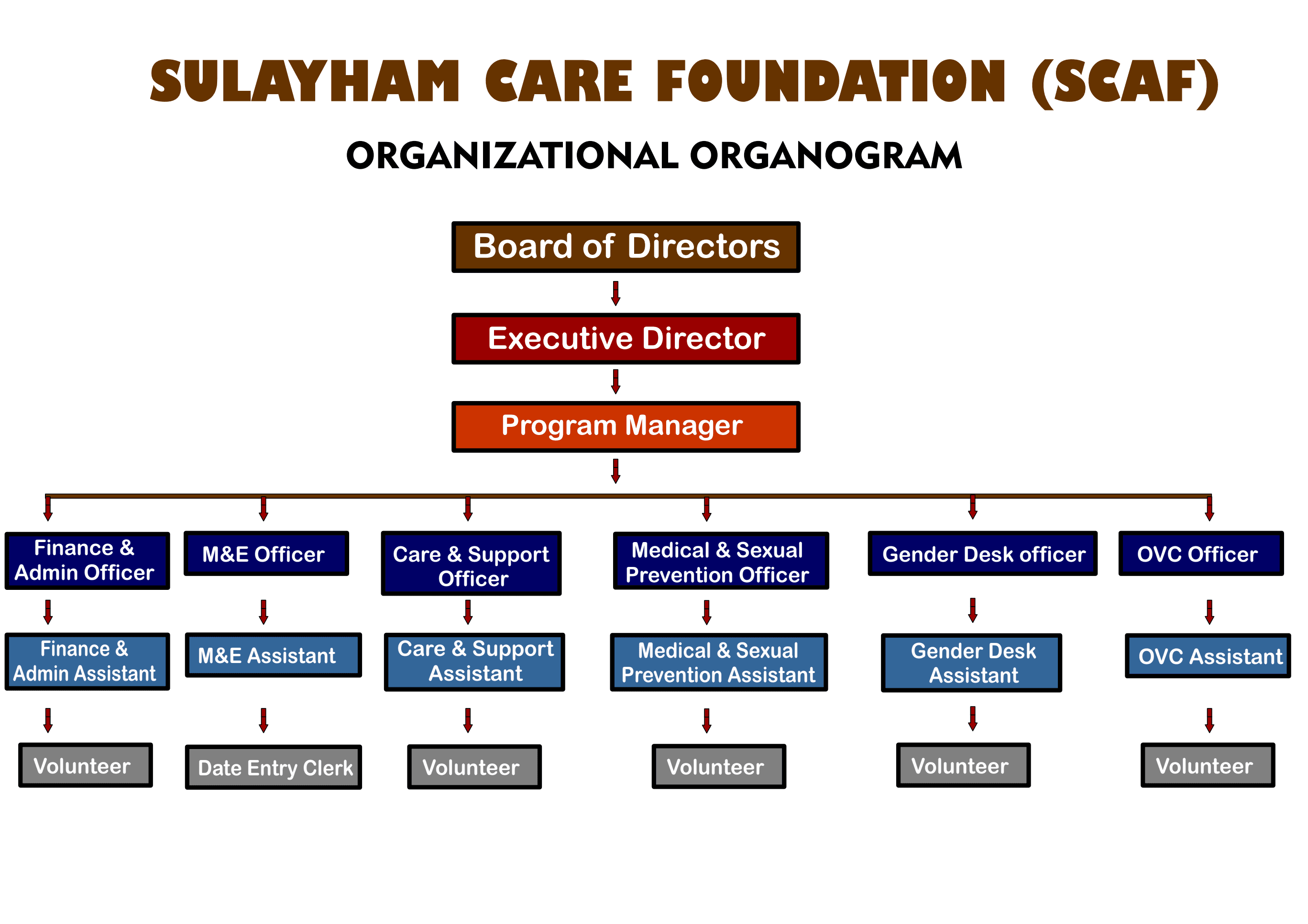
Every unit runs on the same three-tier pattern: an officer who is accountable for the area, an assistant who carries the caseload, and volunteer or clerical support drawn from the community.
Board of Directors
Executive Director
Program Manager
Get in touch
Whether you are a funder, an implementing partner, a government department or a neighbour with a problem worth solving, the same people answer.
No. 45, Moh'd Jega Road, Karewa
Jimeta, Yola
Adamawa State, Nigeria